
Your industries and services news from Malaysia
Provided by AGP
NdFeB Magnet Manufacturing Plant Setup, Feasibility Study, ROI Analysis and Business Plan Consultant
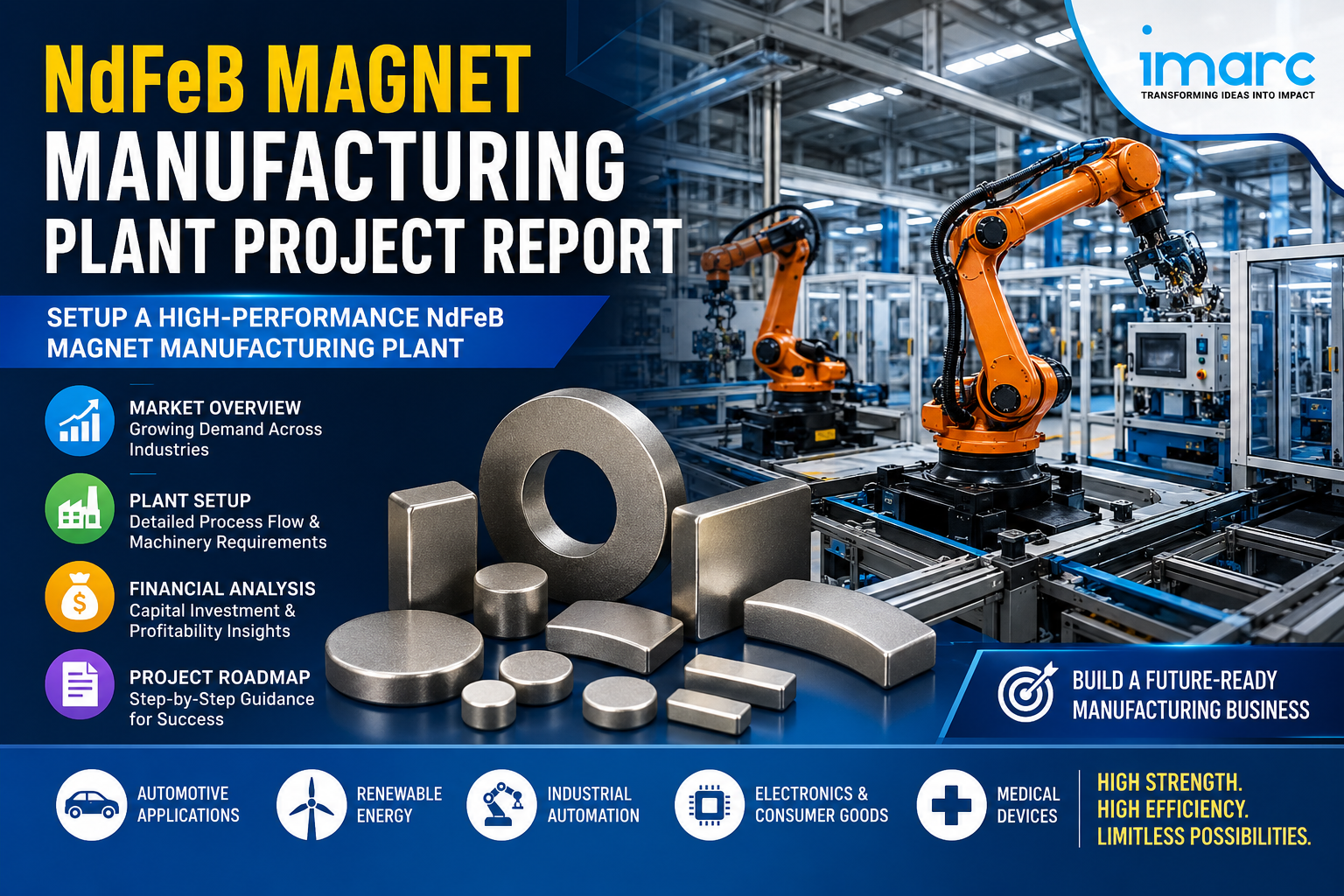
A Detailed DPR Covering CapEx, OpEx, Production Process, ROI, and the Global Investment Opportunity Across EV, Wind Energy, Industrial Automation and Defense
BROOKLYN, NY, UNITED STATES, May 19, 2026 /EINPresswire.com/ -- Setting up an NdFeB magnet manufacturing plant is one of the most strategically timed manufacturing investments available right now. China controls nearly 90% of global rare earth processing and magnet production — and has already demonstrated it will restrict exports as a geopolitical tool. That creates a structural market for producers outside China: strong buyer interest, active government incentives across the US, EU, Japan, and South Korea, and premium pricing for supply-chain-secure product. Add booming demand from EV motors and offshore wind turbines, and you have an investment driven by both market growth and geopolitical necessity.IMARC Group’s NdFeB Magnet Manufacturing Plant Project Report is a full-scale DPR and NdFeB magnet feasibility study for investors and manufacturers entering this space. It covers everything from rare earth alloy sourcing and sintering line configuration to 10-year financial projections, machinery specifications, and regulatory compliance — the level of detail needed when presenting to a bank, a technology licensor, or an investment committee.
𝐑𝐞𝐪𝐮𝐞𝐬𝐭 𝐟𝐨𝐫 𝐚 𝐒𝐚𝐦𝐩𝐥𝐞 𝐑𝐞𝐩𝐨𝐫𝐭: https://www.imarcgroup.com/ndfeb-magnet-manufacturing-plant-project-report/requestsample
𝐍𝐝𝐅𝐞𝐁 𝐌𝐚𝐠𝐧𝐞𝐭𝐬: 𝐏𝐫𝐨𝐝𝐮𝐜𝐭 𝐎𝐯𝐞𝐫𝐯𝐢𝐞𝐰
NdFeB magnets — also called neodymium magnets or neodymium iron boron magnet production yields permanent magnets made from an alloy of neodymium, iron, and boron that forms a tetragonal crystalline structure. They produce the highest magnetic energy density of any commercially available magnet, making them the preferred choice wherever high performance needs to be packed into a compact, lightweight form factor.
The product range is broad, covering multiple performance grades for different applications:
• 𝐒𝐭𝐚𝐧𝐝𝐚𝐫𝐝 𝐠𝐫𝐚𝐝𝐞𝐬 𝐍35 𝐭𝐨 𝐍52: general industrial, consumer electronics, and automotive applications
• 𝐇𝐢𝐠𝐡-𝐭𝐞𝐦𝐩𝐞𝐫𝐚𝐭𝐮𝐫𝐞 𝐠𝐫𝐚𝐝𝐞𝐬 (𝐇, 𝐒𝐇, 𝐔𝐇, 𝐄𝐇, 𝐀𝐇 𝐬𝐞𝐫𝐢𝐞𝐬): EV motors, wind turbine generators, and industrial motors where operating temperatures exceed 120°C
• 𝐁𝐨𝐧𝐝𝐞𝐝 𝐍𝐝𝐅𝐞𝐁 𝐦𝐚𝐠𝐧𝐞𝐭𝐬: sensors, small actuators, and precision instruments where complex geometries are needed
• 𝐆𝐫𝐚𝐢𝐧 𝐛𝐨𝐮𝐧𝐝𝐚𝐫𝐲 𝐝𝐢𝐟𝐟𝐮𝐬𝐢𝐨𝐧 𝐦𝐚𝐠𝐧𝐞𝐭𝐬: advanced EV and aerospace applications requiring reduced heavy rare earth content without sacrificing temperature performance
Grade selection determines raw material composition, process parameters, and end market. A permanent magnet manufacturing plant cost model must account for both grade ranges: standard and high-temperature grades together command a wider customer base and better pricing power, with high-temperature grades carrying the highest return on NdFeB manufacturing plant setup cost.
𝐒𝐮𝐩𝐩𝐥𝐲 𝐂𝐡𝐚𝐢𝐧 𝐂𝐨𝐧𝐭𝐞𝐱𝐭 𝐚𝐧𝐝 𝐒𝐭𝐫𝐚𝐭𝐞𝐠𝐢𝐜 𝐈𝐧𝐯𝐞𝐬𝐭𝐦𝐞𝐧𝐭 𝐃𝐫𝐢𝐯𝐞𝐫𝐬
China accounts for approximately 85–90% of global rare earth mining and an even higher share of rare earth processing and NdFeB magnet manufacturing. This concentration has become one of the most actively discussed supply chain risks among automotive OEMs, defense agencies, and energy companies globally. China has already demonstrated willingness to use rare earth export controls as a geopolitical tool, which has accelerated parallel investment programs in every major consuming economy.
Confirmed investments in the past 18 months show this is moving beyond policy into capital deployment:
• April 2024: e-VAC Magnetics (USA) received a USD 111.9 million Advanced Energy Project Tax Credit to build the first US NdFeB magnet manufacturing facility
• July 2025: Noveon Magnetics (USA) commenced production and started deliveries of domestically manufactured NdFeB magnets
• October 2025: Baotou Rare Earth High-Tech Zone (China) signed a new investment agreement for high-performance permanent magnets, signalling continued expansion
• EU Critical Raw Materials Act: mandates that by 2030, 10% of rare earths must be domestically mined and 40% processed within the EU — driving European magnet plant investment
• Japan, South Korea, and Australia are all running strategic mineral investment programs specifically targeting NdFeB magnet supply chain localisation
These are funded, producing investments — not exploratory. The market for non-Chinese NdFeB supply is being actively created by buyers willing to pay a supply chain security premium.
𝐍𝐝𝐅𝐞𝐁 𝐌𝐚𝐠𝐧𝐞𝐭 𝐌𝐚𝐧𝐮𝐟𝐚𝐜𝐭𝐮𝐫𝐢𝐧𝐠 𝐏𝐥𝐚𝐧𝐭 𝐅𝐞𝐚𝐬𝐢𝐛𝐢𝐥𝐢𝐭𝐲 𝐑𝐞𝐩𝐨𝐫𝐭: https://www.imarcgroup.com/ndfeb-magnet-manufacturing-plant-project-report
𝐃𝐞𝐦𝐚𝐧𝐝 𝐃𝐫𝐢𝐯𝐞𝐫𝐬 𝐚𝐧𝐝 𝐄𝐧𝐝-𝐔𝐬𝐞 𝐀𝐩𝐩𝐥𝐢𝐜𝐚𝐭𝐢𝐨𝐧𝐬
NdFeB magnets serve six industries, each with strong independent growth momentum:
𝐄𝐥𝐞𝐜𝐭𝐫𝐢𝐜 𝐯𝐞𝐡𝐢𝐜𝐥𝐞𝐬: Every EV magnet production plant supplying permanent magnet synchronous motors must deliver 1–2 kg of NdFeB magnets per drive motor. By 2025, an estimated 90–100% of battery-electric and hybrid vehicles use NdFeB motors. Global EV sales are approaching 20 million units per year, accounting for over 25% of total car sales worldwide (IEA). High-temperature grades (for under-hood thermal environments) command premium pricing in this application.
𝐖𝐢𝐧𝐝 𝐞𝐧𝐞𝐫𝐠𝐲: Wind turbine magnet manufacturing for direct-drive generators requires 2.7–3.2 metric tonnes of NdFeB magnets per MW of installed capacity. The global offshore wind build-out pipeline is in the hundreds of gigawatts. This is one of the largest single demand growth vectors for high-grade NdFeB magnets over the next decade.
𝐈𝐧𝐝𝐮𝐬𝐭𝐫𝐢𝐚𝐥 𝐚𝐮𝐭𝐨𝐦𝐚𝐭𝐢𝐨𝐧: Servo motors, linear actuators, and precision motion systems in factory automation use NdFeB magnets. Industry 4.0 adoption drives consistent, predictable volume demand.
𝐂𝐨𝐧𝐬𝐮𝐦𝐞𝐫 𝐞𝐥𝐞𝐜𝐭𝐫𝐨𝐧𝐢𝐜𝐬: Hard disk drives, speakers, AC compressors, and washing machine motors all use NdFeB magnets. High production volumes make this a significant aggregate-demand segment.
𝐌𝐞𝐝𝐢𝐜𝐚𝐥 𝐝𝐞𝐯𝐢𝐜𝐞𝐬: MRI machines, implantable devices, and diagnostic equipment use high-grade NdFeB magnets. Medical is a premium-price segment with stable demand.
𝐀𝐞𝐫𝐨𝐬𝐩𝐚𝐜𝐞 𝐚𝐧𝐝 𝐝𝐞𝐟𝐞𝐧𝐬𝐞: Guidance systems, radar equipment, and aircraft motors use specialty NdFeB grades. Defense procurement is less price-sensitive and more supply-security focused — a strategically valuable segment for producers outside China.
𝐇𝐨𝐰 𝐚𝐧 𝐍𝐝𝐅𝐞𝐁 𝐌𝐚𝐠𝐧𝐞𝐭 𝐌𝐚𝐧𝐮𝐟𝐚𝐜𝐭𝐮𝐫𝐢𝐧𝐠 𝐏𝐥𝐚𝐧𝐭 𝐖𝐨𝐫𝐤𝐬 — 𝐓𝐡𝐞 𝐌𝐚𝐧𝐮𝐟𝐚𝐜𝐭𝐮𝐫𝐢𝐧𝐠 𝐏𝐫𝐨𝐜𝐞𝐬𝐬
An NdFeB magnet manufacturing plant follows a multi-stage metallurgical and mechanical process requiring precision at every step. The production sequence:
• Alloy preparation: Neodymium (25–35%), iron (~65%), boron (~1%), and dysprosium or terbium for high-temperature grades are vacuum-melted and strip cast for a fine, homogeneous alloy structure
• Powder production: The alloy is fractured into coarse powder via hydrogen decrepitation, then jet-milled to 3–5 microns under inert atmosphere. Particle size directly controls coercivity in the final magnet
• Pressing and heat treatment: Powder is pressed under an aligning magnetic field, then heat-treated at 1,050–1,100°C in a vacuum furnace — the most energy-intensive step and the primary determinant of final magnetic performance
• Machining and coating: Magnets are diamond-wire sawn and ground to tight tolerances, then coated with nickel, zinc, or epoxy to prevent corrosion
• Magnetisation and QC testing: Final magnets are pulse-magnetised and tested for remanence (Br), coercivity (Hcj), and energy product (BHmax) against grade specification
𝐏𝐥𝐚𝐧𝐭 𝐈𝐧𝐯𝐞𝐬𝐭𝐦𝐞𝐧𝐭 𝐄𝐜𝐨𝐧𝐨𝐦𝐢𝐜𝐬
𝐏𝐫𝐨𝐝𝐮𝐜𝐭𝐢𝐨𝐧 𝐂𝐚𝐩𝐚𝐜𝐢𝐭𝐲:
• The proposed manufacturing facility is designed with an annual production capacity ranging between 1,000–5,000 MT, enabling economies of scale while maintaining operational flexibility
𝐏𝐫𝐨𝐟𝐢𝐭𝐚𝐛𝐢𝐥𝐢𝐭𝐲 𝐁𝐞𝐧𝐜𝐡𝐦𝐚𝐫𝐤𝐬:
• Gross Profit: 30–40%
• Net Profit: 15–25% after financing costs, depreciation, and taxes
𝐎𝐩𝐞𝐫𝐚𝐭𝐢𝐧𝐠 𝐂𝐨𝐬𝐭 (𝐎𝐩𝐄𝐱) 𝐁𝐫𝐞𝐚𝐤𝐝𝐨𝐰𝐧:
• Raw materials (primarily iron, neodymium, praseodymium, boron): 75–85% of total OpEx
• Utilities: 10–15% of OpEx
𝐍𝐝𝐅𝐞𝐁 𝐌𝐚𝐠𝐧𝐞𝐭 𝐏𝐥𝐚𝐧𝐭 𝐂𝐚𝐩𝐄𝐱 — 𝐂𝐚𝐩𝐢𝐭𝐚𝐥 𝐈𝐧𝐯𝐞𝐬𝐭𝐦𝐞𝐧𝐭 𝐂𝐨𝐦𝐩𝐨𝐧𝐞𝐧𝐭𝐬:
• Land and facility: cleanroom powder processing areas, vacuum furnace hall, machining workshop, coating facility, magnetisation area, QC laboratory
• Core process equipment: vacuum melting furnaces, hydrogen decrepitation systems, jet mills, isostatic presses, vacuum furnaces, heat treatment equipment, precision grinding machines
• Coating lines, magnetisation and testing equipment, inert gas supply, vacuum pump systems throughout
• Pre-operative costs, technology licensing fees, and initial working capital.
𝐀𝐬𝐤 𝐀𝐧𝐚𝐥𝐲𝐬𝐭 𝐟𝐨𝐫 𝐂𝐮𝐬𝐭𝐨𝐦𝐢𝐳𝐚𝐭𝐢𝐨𝐧: https://www.imarcgroup.com/request?type=report&id=7767&flag=C
𝐆𝐥𝐨𝐛𝐚𝐥 𝐌𝐚𝐫𝐤𝐞𝐭 𝐚𝐧𝐝 𝐑𝐞𝐠𝐢𝐨𝐧𝐚𝐥 𝐃𝐞𝐦𝐚𝐧𝐝
The global neodymium-iron-boron magnet market, valued at USD 17.6 billion in 2025, is projected to reach USD 29.8 billion by 2034 at a CAGR of 5.82%. China currently dominates the market with a share of over 75% in 2025. The supply chain diversification drive is systematically creating new production centres outside China, driven by EV adoption, offshore wind expansion, and industrial automation demand.
𝐂𝐡𝐢𝐧𝐚: Controls the entire rare earth value chain from mining to finished magnets. Tightening export controls are creating supply uncertainty globally — the primary driver behind the wave of investment in alternative capacity.
𝐔𝐧𝐢𝐭𝐞𝐝 𝐒𝐭𝐚𝐭𝐞𝐬: Historically dependent on Chinese supply. The IRA and critical minerals incentives have catalysed new investment. e-VAC, Noveon, and MP Materials are all building US-based rare earth and magnet capacity. Government procurement programs for defense and clean energy applications are providing initial off-take certainty.
𝐄𝐮𝐫𝐨𝐩𝐞: The EU Critical Raw Materials Act mandates domestic rare earth processing by 2030. Germany, France, and the Nordics are the largest consuming markets. Several government-backed production projects are in development.
𝐉𝐚𝐩𝐚𝐧 𝐚𝐧𝐝 𝐒𝐨𝐮𝐭𝐡 𝐊𝐨𝐫𝐞𝐚: Both are expanding capacity with decades of manufacturing expertise. Toyota, Honda, and Hyundai are vertically integrating into magnet supply to secure their EV production. Both countries have active bilateral agreements with Australia and Canada for non-Chinese rare earth supply.
𝐈𝐧𝐝𝐢𝐚: India holds the world’s fifth largest rare earth reserves yet imports 100% of its NdFeB magnet requirement from China. The Critical Minerals Mission (2024) allocates ₹34,300 crore for domestic critical mineral processing. India’s EV market — third largest globally, growing at 40%+ per year — plus a 500 GW renewable energy target and expanding defense production create a captive, high-growth buyer base with no domestic magnet manufacturer yet.
𝐒𝐨𝐮𝐭𝐡𝐞𝐚𝐬𝐭 𝐀𝐬𝐢𝐚 𝐚𝐧𝐝 𝐀𝐮𝐬𝐭𝐫𝐚𝐥𝐢𝐚: Australia is building rare earth processing capacity from its significant reserves. Vietnam and Malaysia are emerging as production locations. Growing automotive markets across Southeast Asia are creating downstream demand.
𝐒𝐢𝐭𝐞 𝐒𝐞𝐥𝐞𝐜𝐭𝐢𝐨𝐧 𝐚𝐧𝐝 𝐓𝐞𝐜𝐡𝐧𝐨𝐥𝐨𝐠𝐲 𝐂𝐨𝐧𝐬𝐢𝐝𝐞𝐫𝐚𝐭𝐢𝐨𝐧𝐬
Setting up a rare earth magnet manufacturing plant is more technically complex than most specialty chemical or component manufacturing investments. Key factors:
• Neodymium magnet production plant setup starts with technology access. Process know-how for NdFeB is held by a relatively small number of experienced manufacturers. New entrants typically need to license technology, hire experienced process engineers, or enter a joint venture with an established producer. This is often the longest lead-time item and the most underestimated variable in a greenfield NdFeB manufacturing plant setup cost plan
• 𝐑𝐚𝐫𝐞 𝐞𝐚𝐫𝐭𝐡 𝐬𝐮𝐩𝐩𝐥𝐲 𝐬𝐞𝐜𝐮𝐫𝐢𝐭𝐲: Long-term supply of neodymium, praseodymium, dysprosium, and terbium outside China is the most critical commercial risk. Upstream integration or direct agreements with non-Chinese miners carry a structural competitive advantage
• 𝐏𝐨𝐰𝐞𝐫 𝐬𝐮𝐩𝐩𝐥𝐲 𝐬𝐭𝐚𝐛𝐢𝐥𝐢𝐭𝐲: Vacuum furnaces draw substantial continuous power. Industrial parks with stable grid and backup supply are required
• 𝐆𝐨𝐯𝐞𝐫𝐧𝐦𝐞𝐧𝐭 𝐢𝐧𝐜𝐞𝐧𝐭𝐢𝐯𝐞 𝐩𝐫𝐨𝐠𝐫𝐚𝐦𝐬: The US IRA, EU CRMA, Japan METI programs, South Korea K-Battery programs, and India’s critical minerals mission all offer project financing support, tax credits, or procurement commitments for NdFeB magnet manufacturing plants built outside China
• 𝐏𝐫𝐨𝐱𝐢𝐦𝐢𝐭𝐲 𝐭𝐨 𝐤𝐞𝐲 𝐜𝐮𝐬𝐭𝐨𝐦𝐞𝐫𝐬: Given the logistical complexity of managing rare earth raw materials, many new plants are being located near their primary customers — EV OEM clusters, wind turbine manufacturers, or defense procurement hubs
𝐑𝐞𝐩𝐨𝐫𝐭 𝐂𝐨𝐯𝐞𝐫𝐚𝐠𝐞
IMARC Group’s NdFeB Magnet Manufacturing Plant Project Report provides the depth of technical and financial analysis needed for investment decisions, technology licensing negotiations, bank financing applications, and pre-project engineering planning:
• Complete NdFeB process flow with mass balance, raw material requirements, and quality control criteria at each production stage
• CapEx breakdown: vacuum furnaces, powder processing equipment, pressing systems, sintering furnaces, machining centres, coating lines, magnetisation and testing equipment
• 10-year OpEx projections covering rare earth alloy procurement, energy, labour, coatings, maintenance, and overhead
• Financial model: rare earth magnet plant ROI, IRR, NPV, DSCR, break-even analysis, and sensitivity tables incorporating rare earth price scenarios
• Machinery specifications across multiple automation levels with sourcing options
• Regulatory and licensing framework across key producing geographies
• Product mix strategy: standard grades vs high-temperature grades vs bonded magnets — margin and market access implications
• Rare earth supply chain risk assessment and mitigation strategies
The report is relevant for specialty materials investors, automotive and EV component manufacturers evaluating backward integration, renewable energy developers assessing supply chain self-sufficiency, defense industry suppliers, and financial institutions providing project financing for critical mineral supply chain investments — across any geography.
𝐁𝐫𝐨𝐰𝐬𝐞 𝐌𝐨𝐫𝐞 𝐅𝐞𝐚𝐬𝐢𝐛𝐢𝐥𝐢𝐭𝐲 𝐒𝐭𝐮𝐝𝐲 𝐚𝐧𝐝 𝐁𝐮𝐬𝐢𝐧𝐞𝐬𝐬 𝐏𝐥𝐚𝐧 𝐑𝐞𝐩𝐨𝐫𝐭𝐬 𝐛𝐲 𝐈𝐌𝐀𝐑𝐂 𝐆𝐫𝐨𝐮𝐩:
• 𝗦𝗼𝗹𝗶𝗱 𝗦𝘁𝗮𝘁𝗲 𝗗𝗿𝗶𝘃𝗲 (𝗦𝗦𝗗) 𝗠𝗮𝗻𝘂𝗳𝗮𝗰𝘁𝘂𝗿𝗶𝗻𝗴 𝗣𝗹𝗮𝗻𝘁 𝗣𝗿𝗼𝗷𝗲𝗰𝘁 𝗥𝗲𝗽𝗼𝗿𝘁: https://www.imarcgroup.com/solid-state-drive-manufacturing-plant-project-report
• 𝗦𝗶𝗹𝗶𝗰𝗮 𝗦𝗮𝗻𝗱 𝗣𝗿𝗼𝗰𝗲𝘀𝘀𝗶𝗻𝗴 𝗣𝗹𝗮𝗻𝘁 𝗣𝗿𝗼𝗷𝗲𝗰𝘁 𝗥𝗲𝗽𝗼𝗿𝘁: https://www.imarcgroup.com/silica-sand-processing-plant-project-report
• 𝗥𝗲𝘀𝗶𝘀𝘁𝗼𝗿 𝗠𝗮𝗻𝘂𝗳𝗮𝗰𝘁𝘂𝗿𝗶𝗻𝗴 𝗣𝗹𝗮𝗻𝘁 𝗣𝗿𝗼𝗷𝗲𝗰𝘁 𝗥𝗲𝗽𝗼𝗿𝘁: https://www.imarcgroup.com/resistor-manufacturing-plant-project-report
• 𝗣𝗿𝗼𝗯𝗶𝗼𝘁𝗶𝗰𝘀 𝗠𝗮𝗻𝘂𝗳𝗮𝗰𝘁𝘂𝗿𝗶𝗻𝗴 𝗣𝗹𝗮𝗻𝘁 𝗣𝗿𝗼𝗷𝗲𝗰𝘁 𝗥𝗲𝗽𝗼𝗿𝘁: https://www.imarcgroup.com/probiotics-manufacturing-plant-project-report
• 𝗣𝗼𝗹𝘆𝗹𝗮𝗰𝘁𝗶𝗰 𝗔𝗰𝗶𝗱 𝗣𝗿𝗼𝗱𝘂𝗰𝘁𝗶𝗼𝗻 𝗣𝗹𝗮𝗻𝘁 𝗣𝗿𝗼𝗷𝗲𝗰𝘁 𝗥𝗲𝗽𝗼𝗿𝘁: https://www.imarcgroup.com/polylactic-acid-manufacturing-plant-project-report
• 𝗣𝗼𝘂𝗹𝘁𝗿𝘆 𝗣𝗿𝗼𝗰𝗲𝘀𝘀𝗶𝗻𝗴 𝗣𝗹𝗮𝗻𝘁 𝗣𝗿𝗼𝗷𝗲𝗰𝘁 𝗥𝗲𝗽𝗼𝗿𝘁: https://www.imarcgroup.com/poultry-processing-plant-project-report
• 𝗣𝗮𝗹𝗺 𝗢𝗶𝗹 𝗣𝗿𝗼𝗰𝗲𝘀𝘀𝗶𝗻𝗴 𝗣𝗹𝗮𝗻𝘁 𝗣𝗿𝗼𝗷𝗲𝗰𝘁 𝗥𝗲𝗽𝗼𝗿𝘁: https://www.imarcgroup.com/palm-oil-processing-plant-project-report
𝐀𝐛𝐨𝐮𝐭 𝐈𝐌𝐀𝐑𝐂 𝐆𝐫𝐨𝐮𝐩
IMARC Group is a global market research and management consulting firm operating across 200+ industries. Its plant setup and DPR practice works with investors, project developers, government agencies, and banks across more than 50 countries. IMARC’s detailed project reports are used for bank loan documentation, investment committee approvals, and pre-project engineering planning.
Elena Anderson
IMARC Services Private Limited
+1 201-971-6302
email us here
Legal Disclaimer:
EIN Presswire provides this news content "as is" without warranty of any kind. We do not accept any responsibility or liability for the accuracy, content, images, videos, licenses, completeness, legality, or reliability of the information contained in this article. If you have any complaints or copyright issues related to this article, kindly contact the author above.
